PCOS Diet for Indian Women: What to Eat (and What Not to Fear)
An Indian PCOS diet that targets insulin resistance — with real food, roti and rice included, a sample day, and the mistakes that make PCOS harder to manage.
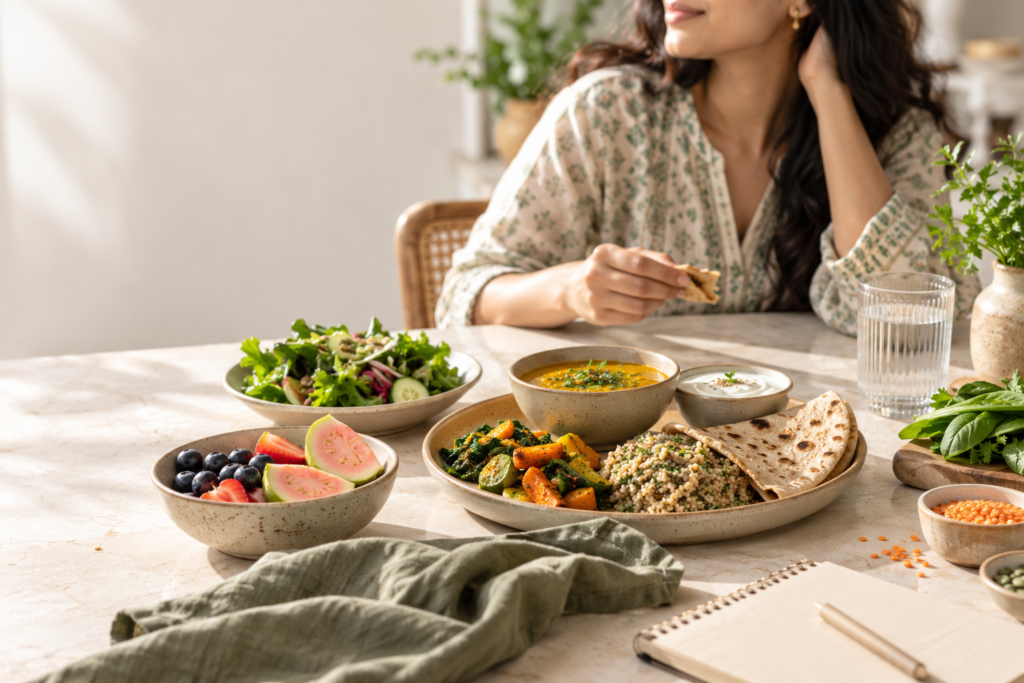
If you have PCOS, you have probably been told to “just lose weight” — and then handed a diet chart that bans half your kitchen. The truth is simpler and kinder: for most women, PCOS is driven by insulin resistance, and the right Indian diet works on that directly.
In short: eat protein at every meal, pair carbs with protein and fibre, cut sugar and refined flour, and move your muscles. Roti and rice can stay.
Why diet matters so much in PCOS
We asked one of the best dietician in India, Archana Batra about it. She says that in many women with PCOS, the body doesn’t respond well to insulin, so it makes more of it. High insulin pushes the ovaries to make more androgens, which can mean irregular periods, acne, facial hair, hair thinning and stubborn belly fat. Bringing insulin down is the main goal of a PCOS diet.
This applies to lean PCOS too — even women at a normal weight can have insulin resistance.
The PCOS-friendly Indian plate
- Protein at every meal: dal, chana, rajma, paneer, tofu, curd, eggs, chicken or fish. Protein reduces cravings and keeps sugar steady.
- Fibre first: start lunch and dinner with salad or sabzi.
- Smart carbs: whole wheat, jowar, bajra, ragi, brown or regular rice in measured portions, oats, dalia.
- Healthy fats in small amounts: nuts, seeds (flax, pumpkin), ghee or oil in measured teaspoons.
Foods to limit
- Sugar, mithai, sweetened chai and coffee
- Packaged juices, colas and energy drinks
- Maida — white bread, biscuits, bakery items, instant noodles
- Fried snacks and namkeen
- Very large portions of rice or roti eaten without protein
Common PCOS diet mistakes
| Mistake | What happens | Better approach |
|---|---|---|
| Very low-calorie crash diets | Stress hormones rise, cycles can worsen, weight returns | A steady, moderate plan you can follow for months |
| Cutting all carbs | Hard to sustain, leads to bingeing | Smaller portions, paired with protein |
| Skipping breakfast | Bigger cravings and overeating later | A protein-rich breakfast within 1–2 hours of waking |
| Relying on supplements alone | Little change without diet and activity | Supplements only after reports are reviewed |
A sample PCOS day
| Meal | What to eat |
|---|---|
| Breakfast | Paneer or egg bhurji with 1 multigrain roti, or 2 moong dal chillas with curd |
| Mid-morning | A fruit with a few almonds |
| Lunch | 1–2 rotis or a small bowl of rice, dal or rajma, sabzi, salad |
| Evening | Roasted chana, sprouts chaat or a glass of chaas |
| Dinner | Grilled chicken/fish or paneer tikka with sabzi and a small portion of grain |
Quantities depend on your weight, activity and reports — this is an example, not a personal plan.
Movement that helps hormones
- Strength training 2–3 times a week — muscle is one of the best tools against insulin resistance.
- Daily walking — especially 10–15 minutes after meals.
- Sleep of 7–8 hours — poor sleep raises cravings and insulin.
When to get help
Talk to your gynaecologist if your periods are very irregular, you’re planning a pregnancy, or you’re on metformin or the pill. A dietitian can then build a plan around your reports — insulin, HbA1c, thyroid, vitamin D — and your routine.
Frequently asked questions
Can I eat rice with PCOS?
Yes. Keep the portion moderate and pair it with dal, curd or another protein plus vegetables.
Is dairy bad for PCOS?
Not for most women. Curd, chaas and paneer are useful protein sources. If you notice that milk worsens acne or bloating, discuss it with your dietitian.
How long does it take to see results?
Many women notice fewer cravings and better energy within a few weeks. Changes in cycles and weight usually take two to three months of consistent effort.